Croaking and Chirping – Students record habitats, birds, and amphibians around Gülpe Field Station

  • Two students are squatting with a fish trap at the edge of a body of water.
    Photo: Riccarda Selegrad
    The students caught live animals in fish traps, including a common newt, tadpoles, and water frogs. They left the fish traps, which they had made themselves from empty paint buckets and plastic bottles, in the water overnight and checked them in the morning. The animals swim into the traps through large openings but cannot find their way out again because of the narrow neck.
  • A spring frog in the foreground of the picture on a student's knee.
    Photo: Johanna Vogel
    One of the most extraordinary encounters was the sighting of an agile frog. It lived up to its name and hopped unerringly onto her pants. Agile frogs are among the rarer amphibian species in Germany and are mainly found in central and southern Germany.
  • Two cheerful students in waders, knee-deep in the flooded study area.
    Photo: Riccarda Selegrad
    Most of the time, the areas studied were partially flooded, with the water sometimes rising above knee level. However, waders made it possible to walk around, as they protect against getting wet and keep the wearer warm thanks to their neoprene fabric.
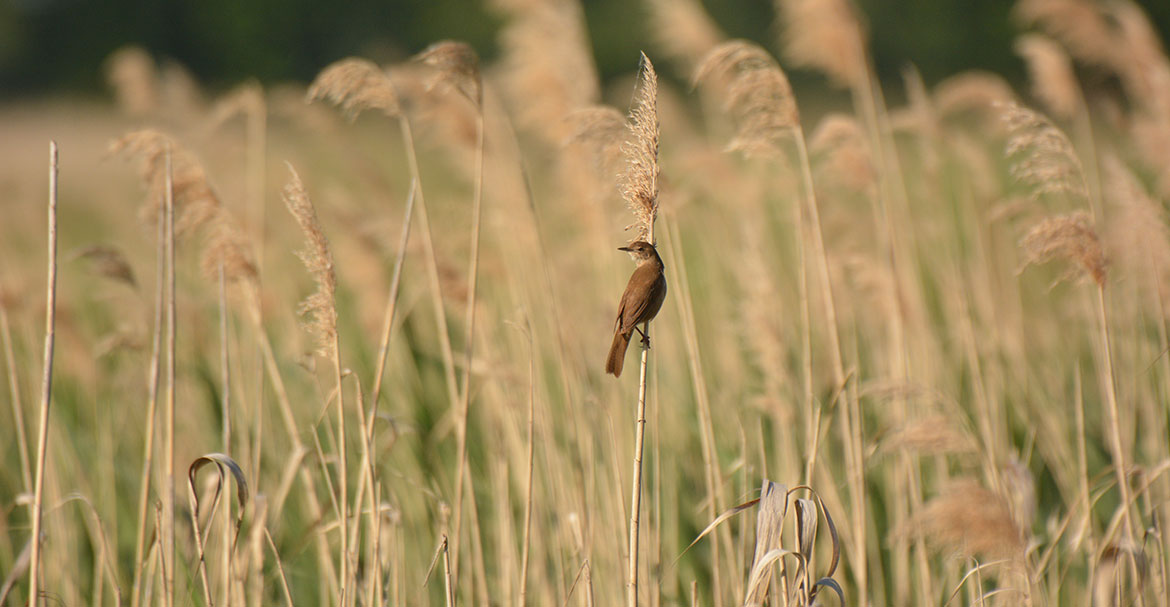
  • A bird from the wagtail family in the vegetation on the riverbank.
    Photo: Johanna Vogel
    The buzzing, distinctive call of the inconspicuous Savi’s warbler is reminiscent of an overly loud cricket and can be heard from far away. Unlike the grasshopper warbler, it lives well hidden in reed beds, which are also home to great reed warblers, sedge warblers, reed buntings, and many other species.
  • A person carrying fish traps on the way to the study areas.
    Photo: Riccarda Selegrad
    The 20 fish traps used for amphibian monitoring had to be transported from the car to the study areas. Fortunately, a hiking backpack, a handcart, and three pairs of hands made the task manageable.
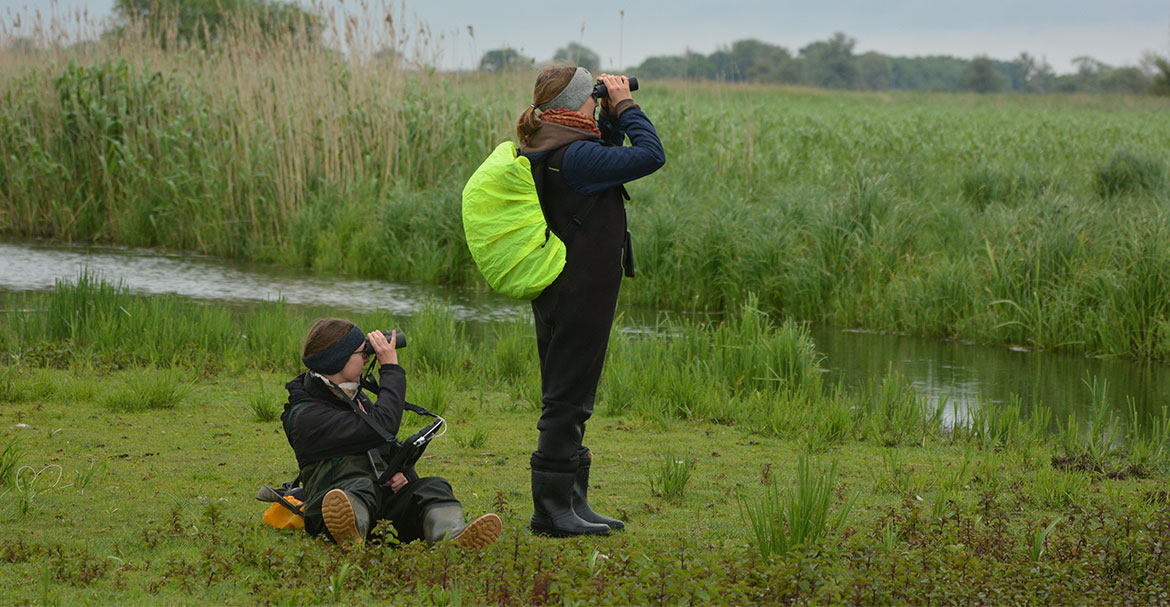
  • Students on the green bank making observations with binoculars.
    Photo: Johanna Vogel
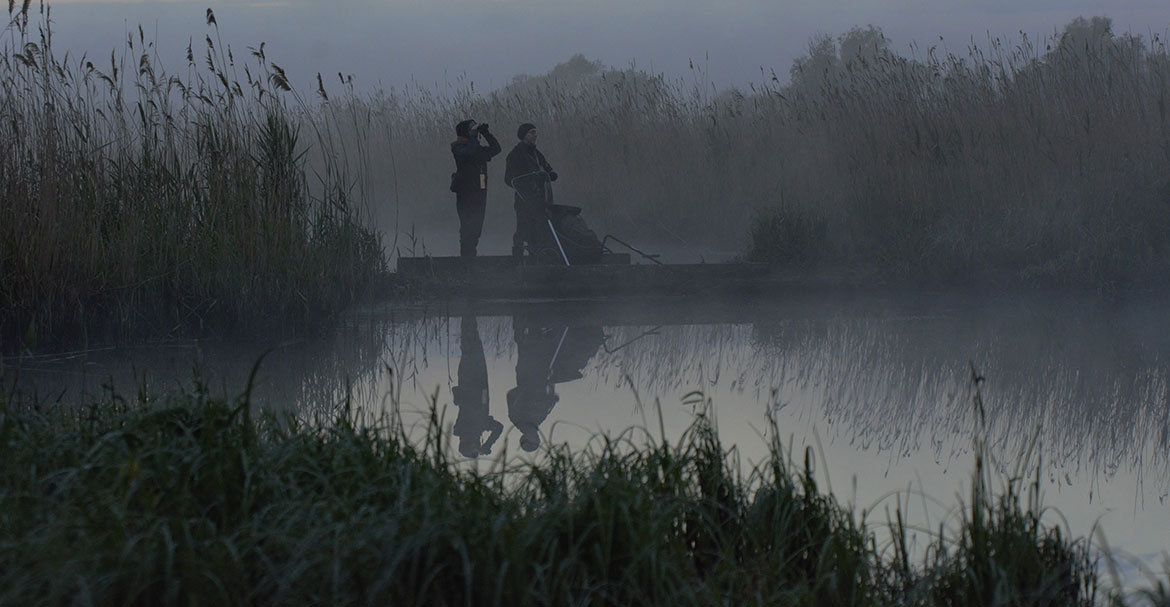
    The students got up between three and four o’clock every morning to begin bird mapping at sunrise. At each location, they visited 20 observation points, where they recorded all visible and audible species for five minutes. They identified reed warblers, peewits, ospreys, ducks, and many other bird species.
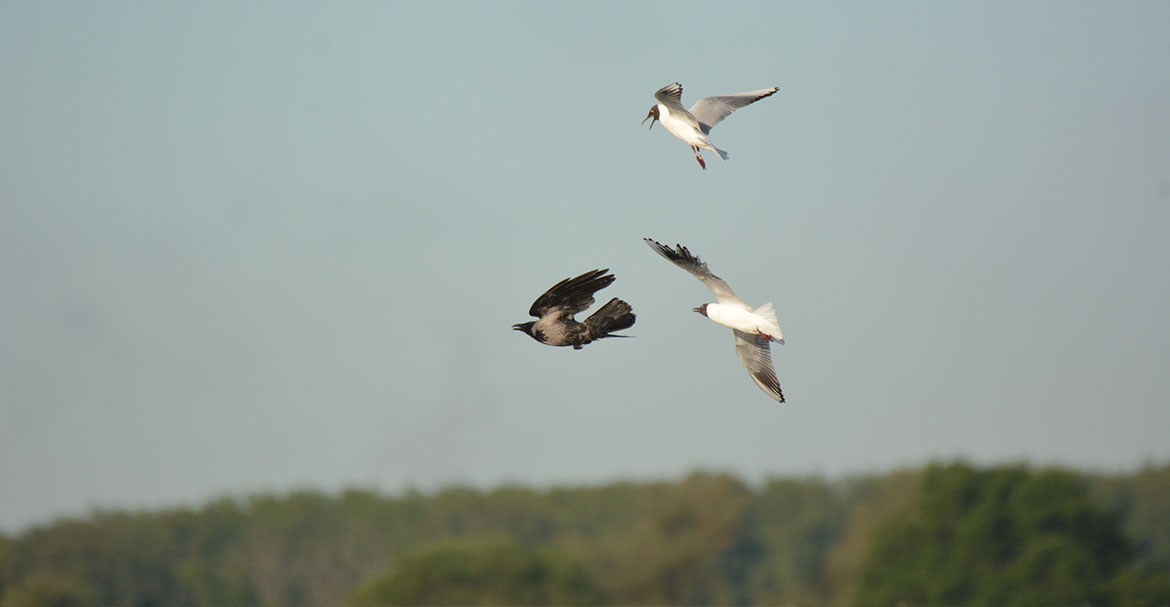
  • A hooded crow is being chased through the air by two black-headed gulls.
    Photo: Johanna Vogel
    This brazen hooded crow was chased away by two courageous black-headed gulls after it had stolen several eggs from their nests.
  • Photo: Johanna Vogel

They are looking for water frogs, Savi’s warblers, and ospreys: In spring 2025, three ecology students documented birds, amphibians, and their habitats along the Lower Havel in Brandenburg and Saxony-Anhalt. Over the past few years, the Nature and Biodiversity Conservation Union (NABU) has carried out renaturation measures on a total of six Havel meadows to restore the river and its banks to a near-natural state and create flood zones. In a practical field study, Potsdam master's students Caroline Börsch-Supan, Johanna Vogel, and Riccarda Selegrad tested and evaluated the BioAu method, developed by the Federal Agency for Nature Conservation, to monitor the success of renaturation measures in meadow areas. They counted various animal species and recorded their habitats based on the vegetation present.


This text was published in the university magazine Portal - Zwei 2025 „Demokratie“. (in German)

Here You can find all articles in English at a glance: https://www.uni-potsdam.de/en/explore-the-up/up-to-date/university-magazine/portal-two-2025-democracy