News from the University of Potsdam

Subjects
Selected Subject:
Spokespersons of the University Research Focuses and Emerging Fields receive their certificates at the beginning of the new funding period.

Profiled – New Research Focuses of the University of Potsdam

In 2025, the University will sharpen its profile with new University Research Focuses. In addition to the already existing “Cognitive Sciences” and …
A swallow starts out on one hand.

Infections with parasites affect the local flight behaviour of swallows

Swallows infected with parasites move less and in smaller ranges than healthy ones – with detrimental effects on their foraging success and their …
Die Frühlings-Platterbse wächst im Wald auf dem Boden

Consequence of over-fertilization – Diversity of nitrogen-fixing plants is reduced

Media Information 21-10-2024 / Nr. 099

Anthropogenic nitrogen deposition and climate change can reduce the competitive advantage of nitrogen-fixing plants, leading to reduced diversity of …
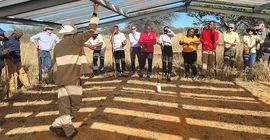
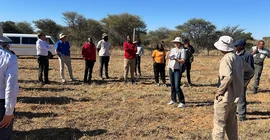
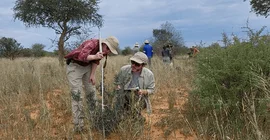
Potsdam researchers in the groups of Prof. Dr. Anja Linstädter and Prof. Dr. Florian Jeltsch from the Institute of Biochemistry and Biology contributed their field data from drylands in South Africa and Namibia to the global study.

Branching Out – Study Shows Causes for the Dominance of Woody Plants in Drylands

Media information 14-10-2024 / No. 096

Precipitation, temperature, and grazing have the greatest influence on whether woody or herbaceous species grow in dryland areas. This has been shown …
Abundant young stands of sycamore (Acer pseudoplatanus) – in this case alongside Norway maple (Acer platanoides)

How Plants Migrate Due to Humans – Nitrogen Pollution Leads to Westward Range Shift of European Forest Plants

Media information 11-10-2024 / No. 095

Climate change has been jumbling ecosystems around the world for the past few decades. A common assumption is that many species are shifting their …
Springbok with tracking collar.

Adapted – Study Shows That Wild Animals Also Get Accustomed to Humans

Media information 30-09-2024 / No. 089

Wild animals are less susceptible to human disturbance if they live in areas with a high human footprint. Potsdam researchers have highlighted this in …
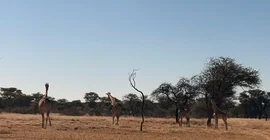
Savanna vegetation in Southern Africa

Diversity as survival strategy – How plants adapt to extreme climates in drylands

In a large-scale international study under leadership of the French research organizations INRAE/CNRS and the King Abdullah University in Saudi Arabia …
Prof. Zoran Nikolski

“We are bridging a gap that cannot yet be closed in the lab.” – Zoran Nikoloski about the world of bioinformatics

Biology is the scientific research of life, and computer science is the art of automatic information processing. Does that go together? Absolutely! …
Das Exemplar, aus dem das Kerngenom des Blaubocks mit hoher Abdeckung extrahiert wurde: ein junges Männchen aus dem Schwedischen Museum für Naturgeschichte.

Why European Colonization Drove the Blue Antelope to Extinction

Media information 12-02-2024/ No. 024

An international team of researchers led by the University of Potsdam has generated and analyzed the first high-coverage nuclear genome of the extinct …
Computer-generated illustration of a protein

How plants adjust their photosynthesis to changing light – Publication in “Nature Communications”

Light supplies the energy plants need to build up biomass. A research team from Bergen, Bochum, Düsseldorf, Münster and Potsdam headed by Heinrich …