




If you had to choose: North or South Pole?
That’s a difficult decision for me. Both are unique, impressive worlds. The Arctic captivates with its restrained and subtle beauty. You have to immerse yourself in it to fully appreciate its nuances. In contrast, Antarctica overwhelms you from the very first moment, with massive icebergs and monumental ice walls towering like a fortress. Both regions have a fascinating and very special charm. I would love to set off again immediately for one of these impressive polar worlds.
The polar regions are your research passion. How did that come about?
This interest arose during my physics studies. Back then, like many at the beginning of their scientific careers, I wanted to understand “what holds the world together at its core.” But it also became increasingly important to me to make a meaningful contribution to humanity through my work. So, while searching for a topic for my thesis, I explored many options and ultimately decided to study the ozone layer. In the early 1990s, the ozone hole over Antarctica had just been discovered, and there were many unanswered questions, such as the state of the ozone layer in the Arctic and whether an ozone hole might also form there. In 1992, I traveled there for the first time to conduct measurements. The journey was fascinating: it was January, the polar night prevailed, and everything was shrouded in eternal darkness. The only light came from the moon or the spectacular auroras. During long, solitary excursions through the dark, deserted, icy landscape of Spitsbergen, I experienced this silent, odorless, and cold expanse. These impressions left a deep mark on me, so much so that I wanted to return again and again. My career path allowed me to continue pursuing this passion and remain committed to polar research.
How do you manage the balance between research expeditions to spectacular, remote areas and the comparatively monotonous work in the lab or at your desk?
Scientific progress rarely happens directly in the field, even though it is based on observations and data collected there. During expeditions, I’m constantly busy, as the primary goal is to collect as much data as possible. Back home, however, it’s also extremely motivating and satisfying to generate new knowledge and insights from that data. And this process takes place at the computer, through analysis and modeling based on the data. Ideally, the findings and theories that emerge from this process are then incorporated into new generations of climate models. Fieldwork and the subsequent generation of new insights at my desk together create the appealing and fulfilling balance of my profession.
What makes the polar regions so different compared to other regions of the world? Why are these areas important for research, even though they are far removed from places where people live?
The polar regions are fundamental components of the global climate system. The Arctic is currently warming about four times faster than the global average. In Antarctica, the climate is more complex: for many decades, despite regional warming in the Antarctic Peninsula and the relatively small West Antarctic, there was no systematic warming of the entire continent, particularly not in large parts of the East Antarctic Ice Sheet, the largest ice mass in the world. However, we have recently observed unprecedented heat waves on the Antarctic ice sheet as well, which we do not yet fully understand. The fact that Antarctica was, for a long time, the last major region on Earth to defy the global warming trend makes it particularly compelling for scientific investigation. A deep understanding of the climate processes there is crucial for better predicting the global climate and, consequently, also the climate in our latitudes. Furthermore, changes in Antarctica have an immediate and direct impact on global sea-level rise and thus also on Germany’s coastal regions. The climate system is globally interconnected.
The polar regions are also the last areas completely free of visible human structures – simply fascinating in our human-shaped world. At the same time, the ice landscapes offer incredible diversity. Ice is one of the most diverse substances of all: ice sheets, ice shelves, icebergs, sea ice, glacial ice – all completely different and unique worlds, each with its own distinct shapes and colors. And yet they all consist of just one substance: simple, frozen water.
One of your research interests is understanding polar atmospheric processes in a global context. What does that mean?
The Arctic plays a particularly prominent role in the global climate system, and especially for our region. If you look at the Earth from above, you can see both the North Pole and Europe at the same time. The Arctic is our doorstep and is the “weather kitchen” for the entire northern mid-latitudes, where the majority of our planet’s 8 billion people live, i.e., in North America, Europe, and Asia. The temperature contrast between the cold Arctic and the warmer mid-latitudes drives the Northern Hemisphere’s main wind system – the westerlies. At an altitude of ten to twelve kilometers, this condenses into a well-defined westerly wind band, the jet stream, whose driving force is this temperature difference. However, since the Arctic is warming faster than the rest of the planet, this temperature difference is decreasing, causing the engine to stall. When the jet stream becomes more unstable, it tends to form more waves, and can sometimes even break down, generating increased air flows from north to south or vice versa. This leads to weather extremes in our latitudes: from the influx of hot and dry air from the subtropics – causing prolonged summer heat periods – to Arctic cold air outbreaks that lead to pronounced cold spells in winter, embedded within the overall warming trend of our winters and intermittently interrupting it.
These weather extremes, which we are now seeing more frequently in our region, are a direct consequence of Arctic warming. In addition, the jet stream influences how efficiently low-pressure systems move across Europe. Instead of distributing rain evenly, stationary systems often remain over a small region and release large amounts of precipitation there, contributing to an increase in heavy rainfall events. The rise in extreme weather events is therefore also a consequence of changes in the polar regions.
You mentioned that the polar regions are warming more rapidly than other areas in some respect. Is the subject of your research melting away?
In fact, these changes make the research even more significant. Unfortunately, it is foreseeable that we will have hardly any ice left on the Arctic Ocean during at least some summers in the second half of this century. But whether this will become a permanent condition is still unclear and depends on the measures we take. Nevertheless, there will be summers in which the ice almost completely disappears. We would then have an open ocean basin at the North Pole where one can go sailing, instead of a closed ice cover – a bizarre vision of a different world.
We do not yet know enough about how the global climate will adapt to this. In winter, heat from the ocean will warm the Arctic more intensely, as the thinning ice cover insulates the cold atmosphere less effectively from the warm ocean water. The retreat of the ice also leads to increased evaporation of water vapor, a change in cloud properties, and possibly more precipitation on surrounding continents. We need to understand all these processes, as they have a significant impact on weather and climate in our latitudes.
It is crucial that we are able to predict these changes so that humanity can prepare for them. In practical terms, this could mean planting suitable tree species or adapting agricultural practices to minimize potential damage. By taking such measures, we can hopefully mitigate the impacts of the impending climate changes.
So you’re not worried that your field of research is becoming obsolete, but rather that these changes highlight the need to look even more closely?
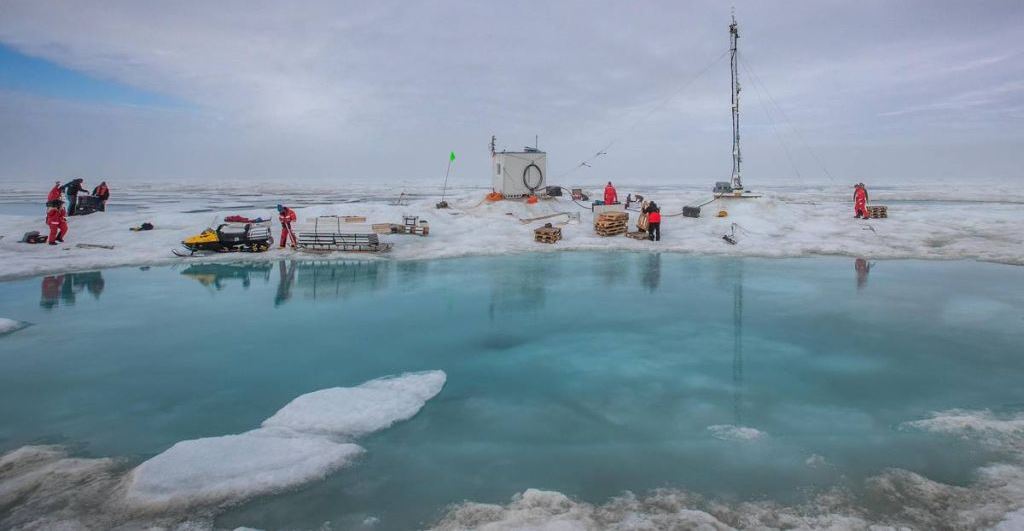
Exactly, my concern isn’t that the region itself will be lost. But conditions there are changing so rapidly that we have to be incredibly fast in our research. During the major MOSAiC expedition in the Arctic in 2019/20, we were able to observe many processes in detail. However, the climate there is already different today from what we saw during the expedition. And in a few years, it may be completely different again.
The ecosystem in the Arctic is reacting very quickly to these changes, and we must be just as quick in our research to keep up with them. An important task is to comprehensively document these changes, because understanding the dynamics forms the basis for long-term analyses and model predictions. Only through a precise understanding of polar climate processes can we use our models to make predictions for the future and thereby highlight the consequences of varying climate protection ambitions, thus contributing to responsible political action. In addition, this allows for the development of more targeted adaptation measures to mitigate damage caused by climate change as much as possible.
At the end of November 2025, the COP 30 World Climate Conference ended with virtually no results, as has often been the case before, without any genuine political commitment to phasing out fossil fuels. As a scientist, how do you deal with such outcomes?
Indeed, the world has been moving in an unfortunate direction over the past decade. Instead of relying on international cooperation and the joint responsibility of all states, national interests have once again come to the fore. Competition among states currently dominates international discussions, which does not create good conditions for solving a global problem like climate change. This can only be adequately addressed through joint action by all states. But we have already achieved a lot. The annual CO2 emissions of European countries and North America have been falling for decades – in Germany by nearly 50% since 1990 – and global annual emissions are expected to begin falling around 2030 – a success largely due to China’s climate protection efforts. These long-term successes provide motivation and optimism even in such difficult times as today. We know how climate protection works; we just have to become much faster than we are now.
Does this affect your work? Do you say, “now more than ever,” or do you think “we need to approach this differently”?
We strive to communicate our findings to society and politics in a clear and understandable way so that the right conclusions can be drawn from them. And we must step up these efforts because we are in a phase in which the reputation of science has, unfortunately, suffered greatly. In order to restore trust in science, it is crucial to communicate the facts neutrally, thoroughly, and with respect. In particular, it is important to strictly separate any personal political agendas from science. In a changing society, we need research to serve as a neutral and reliable authority. Any semblance of agenda-driven communication dramatically harms science and contributes to the erosion of trust. And societal trust is the most important asset we scientists have – our entire influence on society is fundamentally based on it.
When a society begins to make decisions based on conspiracy theories rather than scientific facts, this puts its future at considerable risk. That is why I consider it particularly important to secure a clear and influential place for science in public discourse. For us scientists, it is about building trust through precise and transparent communication and thus contributing to decision-making in society.
You mentioned the MOSAiC expedition: In 2019/20, the research icebreaker “Polarstern” drifted through the Arctic Ocean for months, trapped in the ice. On board were people from 20 countries. You led the expedition. A childhood dream come true?
Absolutely. It’s every scientist’s dream to conduct such extraordinary research, especially in places where it’s never been possible before. The Arctic is covered by a thick layer of ice during the winter, so thick that even our best research icebreakers can't get through. We’d always been shut out of that region – a huge blank spot on the map of research data. Before the MOSAiC expedition, no research icebreaker had ever been in the Arctic during winter. This was completely uncharted territory for us, and with the complex array of instruments we had with us – over 100 tons of scientific equipment – we were able to observe, for the first time, phenomena that are of enormous importance for our understanding of the climate system and, ultimately, relevant to the future of humanity.
Until shortly before departure, it seemed almost unbelievable to us that we could really succeed in this endeavor. Many had said that we urgently needed this data, but that it was not possible to implement. Planning for the expedition took a total of ten years, and it naturally began as building castles in the air that hardly anyone believed could become reality. But a small group of highly motivated and persistent people managed to work together and ultimately organize the expedition successfully. Twenty nations contributed to the funding, and we succeeded in raising a budget of 140 million euros.
MOSAiC took place about five years ago. Are you still busy analyzing the extensive data?
Absolutely, and this process will likely continue for another five years. So far, we have already published well over 250 scientific articles, many of them highly cited. The scientific community has been eagerly waiting for this data and the insights derived from it. Two to three years after the expedition, the publication rate rose almost exponentially, and it shows no signs of slowing down; the peak of our scientific productivity is still far from being reached. That’s why I expect that work with the MOSAiC data will continue with high intensity over the next five years.
And if you were to highlight some of the most important or surprising findings from this abundance of data…
The MOSAiC expedition is like a giant puzzle aimed at providing a comprehensive understanding of the climate system of the central Arctic. If you’ve ever put together a puzzle yourself, you see a complete picture at the end and then recognize what you’re looking at. But it’s hard to say which piece of the puzzle was the most important. The most important thing is actually the completeness of the picture.
For example, as a key result, we have for the first time created a complete picture of the Arctic’s surface energy balance. This balance is important because it determines whether a region is warming or cooling. We now understand how this crucial energy balance depends on the properties of snow, ice, the ocean, the air, and clouds, and we have measured how these properties change over the course of the seasons. For the first time, we can now incorporate this into our climate models based on real observations.
Another significant finding is the realization that Arctic sea ice does not represent a tipping point in the climate system, an aspect that had previously been disputed. Our investigations of freezing processes, particularly in winter, have shown that the ice reacts very directly and linearly to climate change and is not subject to nonlinear tipping-point dynamics. This means: if we stabilize the climate system and stop warming, we will immediately stabilize Arctic sea ice as well. We have not yet crossed a runaway point beyond which the ice disappears on its own. In fact, such a point does not even exist. The ice could even expand again if the climate cools down at some point in the future. This realization is both encouraging and a call to responsibility; through ambitious climate protection, we can still preserve parts of the polar bear’s habitat.
A third example: the expedition discovered and characterized, for the first time, a completely novel ecosystem beneath the ice. In the spring, meltwater seeping from melt ponds on the ice forms a system of inverted lakes of light freshwater in the inverted valleys and mountains on the underside of the ice. This is sharply separated from the underlying cold, salty seawater and forms a distinct habitat. Life thrives at the interfaces between these lakes and the seawater – a fascinating ecosystem. However, these new ecosystems are not only fascinating worlds; they also contribute to climate dynamics by producing gases and aerosols that can influence weather and climate.
These are just a few examples of the many findings. Ultimately, as I mentioned before, each of the 250 publications is an indispensable piece of the puzzle in our overall understanding of the Arctic climate system.
In 2026, a major exhibition on the MOSAiC expedition was launched. What is the idea behind it?
The exhibition stands out for its magnificent immersive concept. For anyone who cannot or does not want to travel to the Arctic themselves – a journey associated with an ecological footprint one might prefer not to leave behind – the exhibition offers the chance to get as close as possible to that experience. In several rooms, visitors can experience both the Arctic and the Antarctic. However, the exhibition goes beyond simply conveying the feeling of the Arctic or Antarctic. It also explains the complex interconnections within the climate system and what must be done now to protect these unique ice-covered worlds. Its goal is both to inform and to motivate action in order to preserve these precious regions.
You yourself have invested a great deal in public outreach for the MOSAiC expedition in recent years. What gives you this determination?
I believe the enormous potential of our research lies in two areas. First, our research activities take place in a field that fascinates many people. The images and stories we bring back from our expeditions captivate people and spark their interest in science. This allows us to inspire enthusiasm for research and show people how fantastic the world of science can be. It also allows us to clearly demonstrate what we achieve with the resources and taxpayer funds that go into research, and what we contribute to society.
Since our research is more accessible and has an adventurous aspect, we feel a greater responsibility to communicate it. Of course, other fields of research, such as particle physics, can also be fascinating, but this often requires more willingness from people to engage with them. In contrast, images of gigantic white-and-blue icebergs, cute polar bears, or penguins immediately grab attention, and we can make good use of these to convey scientific content as well. We have the potential to reach people with our research who might otherwise be less concerned with climate change.
MOSAiC was quite an adventure…
Every expedition has its own appeal and is great in its own way. But MOSAiC indeed stood out—an expedition of enormous scale that has remained unmatched to date and will likely remain so for a long time to come. Drifting through a region so isolated from the rest of humanity, trapped completely in ice, was something truly special. We were completely on our own in the darkness of the polar night, drifting at the North Pole—an experience that all participants will cherish for the rest of their lives. It is precisely this combination of complete solitude, an alien environment, and the necessity of having to overcome all challenges on our own that bonded the team together. Such undertakings are not only scientifically significant but also personal challenges and experiences that remain unforgettable.
Will there be something like this again?
Not in this form, at least not for now. But we are currently planning a large, internationally coordinated, and multidisciplinary expedition to Antarctica. This expedition is particularly important because, as mentioned, we have observed surprising and alarming developments in Antarctica in recent years, such as the sudden retreat of the previously stable sea ice and breathtaking heat waves reaching high into the Antarctic ice sheet. In fact, we have measured temperatures up to 40°C above normal. These are unprecedented extreme events that dwarf all heat waves in the rest of the world. This illustrates just how massive and unexpected the developments in Antarctica currently are. To understand these events, it is urgently necessary for us to conduct research on-site. That is why we are planning a comprehensive year-round expedition to Antarctica for 2028. The schedule will differ from that of MOSAiC; there will be no long, isolated ice drift, and the ship will call at ports several times during the year to resupply. But our research will hopefully help us better understand the mechanisms behind these extreme events and develop solutions to address the impacts.
I hardly dare ask about the “day-to-day operations”...
Well, for one thing, I’m already deeply involved in planning and preparing for the major Antarctic expedition I just mentioned. At the same time, I regularly go on smaller expeditions to the Arctic and Antarctic, or to a research station on a tropical island in the western Pacific that I established ten years ago. Since then, it has been providing important insights into the atmospheric chemistry of the region and the global stratosphere in a completely different field of research. And, of course, I’m also coordinating the scientific analysis of the MOSAiC results; I’m currently organizing the fourth major international conference on this topic, which took place in Potsdam in March 2026. Fortunately, we have a fantastic, well-coordinated team that now handles many tasks independently. Nevertheless, it remains important to continue coordinating and ensuring that everything makes sense within the wider context.
Another focus of my work is the development of new climate models. So far, over decades of climate research, we have not made any breakthroughs in modeling clouds and their key interactions with aerosols. These interactions remain the biggest uncertainties in climate models. This is partly because cloud processes range from the nanometer scale to the global scale. Traditional climate models, which rely on the numerical solution of coupled differential equations describing these processes, are not very good at modeling these “stiff” systems. That is why I am now working on a data-driven modeling approach based on artificial intelligence that could better address these challenges. Essentially, the goal is to develop a foundational model for clouds and aerosols for the first time—using AI and massive amounts of data instead of process understanding and differential equation solutions. We’ll see where this takes us.
Thanks to the NOMIS Prize, which I recently won for my work, I can move this research forward quickly. With the prize money, I have the opportunity to conduct research freely and test this modern approach without being slowed down by research bureaucracy. This is only the third time this prestigious prize has come to Germany and the first time to our university. I am very happy about this and plan to use the prize money to establish a new research group that will work on this forward-looking project.
More information on Prof. Dr. Markus Rex: https://www.awi.de/ueber-uns/organisation/mitarbeiter/detailseite/markus-dietrich-rex.html
More information on the presentation of the NOMIS Award to Prof. Dr. Markus Rex: https://www.uni-potsdam.de/de/nachrichten/detail/2025-10-17-nomis-preis-2025-geht-an-klimaforscher-prof-markus-rex